
'Review' of Schindler's List: Symbolism and the Human Implications
Schindler’s List, directed by Steven Spielberg portrays the horrible reality Jews found themselves in during WW2, in Nazi-occupied Poland.

This short write-up will not focus on cinematography of the film at all. Rather, it will be about the symbolic nature and the human implications portrayed in it.
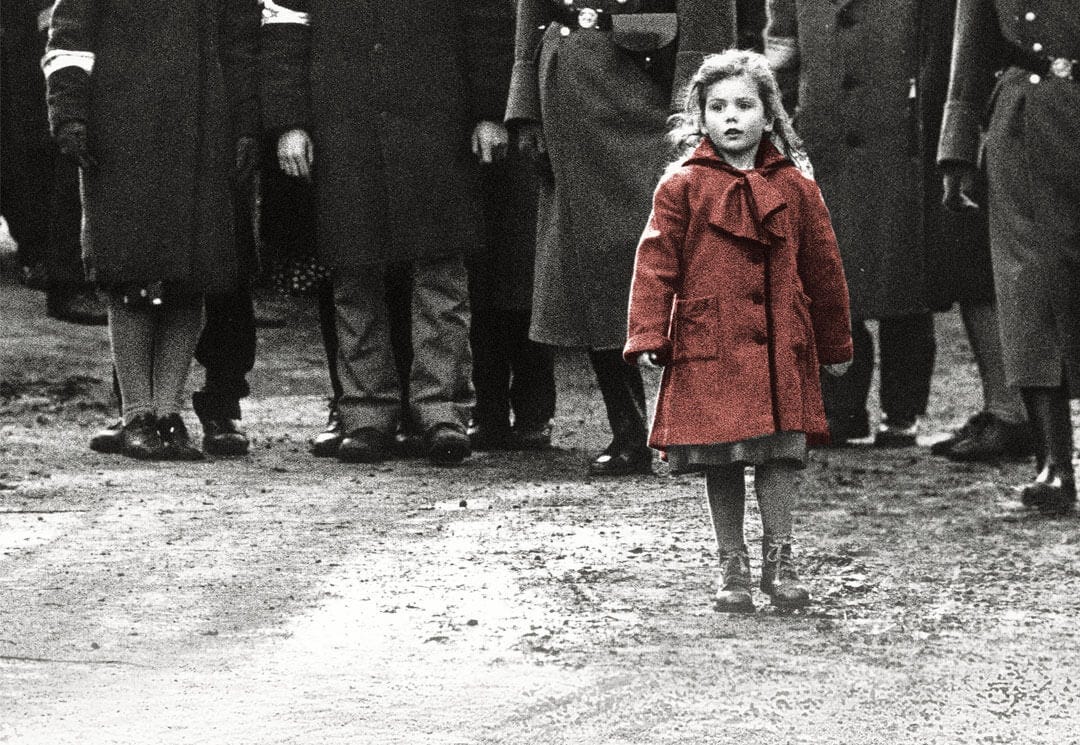
The movie follows the fate of so many Jews during WW2 in occupied Poland. It is difficult to watch but it’s necessary for anyone interested in films and history to do so. It’s about human expectations, cruelty, the dark side of man, hatred, love, grief. Not least it's about the right to live.
Oskar Schindler, played by eminent Liam Neeson is our main character. He’s a German businessman who runs metalwork shops, at the time producing mostly metal pots. There are too many characters with complex story arcs to even begin writing their names down, so I will focus on the most impactful to me. Furthermore, I will spare some details that may be of importance but in favor of cohesion and flow. Schindler’s List’s opening scene portrays two Jewish lights being lit. This has significant symbolic value, something I will return to later on.
STORY
The film begins with Jews being shuffled onto buses and into the Krakow ghetto. Here Schindler meets Iszhak Stern, a Jewish businessman, now forced out of labor due to Nazi laws. Schindler quickly realizes the worth of Stern and hires him to be his factory chief. At this point in time, Stern forges essential worker documents to save people he knew would be placed in the ”expendables” group by the Nazis. Expendables is what the Nazis called those who are to be executed, mostly sick and old people who cannot work. As a viewer, it is already apparent Stern lives for nothing else than to save people from certain death, and this theme follows him for the duration of the film. In the ghetto Jews feel somewhat relieved, as they think it’s better to live more secluded from the Nazi grip. One man proclaims something that on its surface can be interpreted as whimsical and ignorant. ”The ghetto is liberty”. This hastily and off-the-cuff statement will end up lending the cognizant viewer with depth and symbolical complexity.
LIQUIDATION OF THE KRAKOW GHETTO / MARCH 13, 1943
Violent and deadly clearing out of the Krakow ghetto.
The belongings of frightened Jews prepared to flee are tossed from balconies onto the wet snowy asphalt below. Jews are separated into different groups, ones with work certificates (essential workers) and those who lack documents. Men to the right, women to the left. Most of the people in the non essential worker group are regarded as “expendable”. Some are shot. The ones who try to flee face the same fate. The essential workers are shipped to Płaszów. Oskar, whose own wife is Jewish is urged to leave. Emilie Schindler asks him if anyone will ever doubt she is his wife. Oskar doesn’t give a satisfactory answer and Emilie soon thereafter leave on a train to an unknown location.
Deathly ill people in the city hospital are executed by SS officers as their doctors watch in disdain and abhorrence. The ear deafening and echoing sound of gunshots from machine-guns is the starting shot of Hitler’s vision of a systemic extermination of Jews being enacted. At this point, Oskar Schindler starts to show compassion for the Jewish people, despite his initial indifference. On his horse on top of a hill, looking down at the ghetto with a female companion, Schindler’s previously excitable and happy personality, now only exudes disgust.
As some Jews initially, if only for a couple of hours, manage to flee the nazi killing squads by hiding inside attics, floorboards and pianos, they too meet the same fate as the other “expendables”. All that is now left in the Krakow ghetto is Schindler’s factory building and with it are tens of dozens of those same metal pots his workers had been making.
Besides Schindler and Stern, I will focus on two other characters. Amon Goeth, a Nazi commander of the Polish concentration camp Płaszów and a Jewish woman and maid named Helen Hirsch. Helen, who Schindler takes a liking to when he visits Goeth at the concentration camp. At the camp Schindler talks to Helen in the basement of Goeth’s villa, on top of a hill with a view of the camp. Helen has been chosen to be Goeth’s maid.
Amon Goeth is a cruel man. In the beginning of the film he is seen shooting prisoners at will and at random, from his balcony as some sort of morning routine. Schindler discusses mundane things with Helen, mostly pertinent to Goeth’s character and behavior. She goes on to tell Schindler about those spontaneous and callous murders Goeth has been committing. Fearing her own fate, Helen carefully navigates Goeth's demands, barely speaking back and doing what she thinks will appease him. Helen tells Schindler that Goeth beats her. She says to Oskar about hers and Goeth’s conversation:
”Why are you beating me? He said: “The reason why I beat you now is because you ask why I beat you”.
“I know you’re sufferings Helen”, Oskar says. “It doesn’t matter. I have accepted them.”, Helen concludes.
Oskar Schindler doesn’t like how Helen is treated and how Goeth assassinates workers at will. He tries to change Amon’s heart, if only for a few cinematic minutes. He does this brilliantly by talking metaphorically, citing an old emperor of Rome.
“The real power is to pardon someone when they deserve to die”.
Amon looks up to Schindler, as if he is a God, or at least a man Goeth knows he can never become. Goeth is merciful for a couple days after the heart-to-heart sit-down with Schindler and is forgiving towards people who he usually would dispose of in quick succession. But it doesn’t last for much longer, Goeth returns to his old self. From here on out the portrayal of the cruelty of the Nazi’s take form on the screen. Schindler loses workers as some are executed for no apparent reason. Schindler’s innocent kiss with a Jewish woman irritates some of the Nazi superiors at Płaszów. He is shortly thereafter arrested and detained at a police station. Upon exiting the police station in where Oskar was briefly detained for kissing the Jewish woman, he is greeted by what thinks is snow. But it isn’t snow. It’s ash raining down from the sky. Ash from burned human beings. Remember the symbolic nature of the snow being ash.
CHUJOWA GORKA // APRIL 1944
Department D orders Goeth to exhume and incinerate the bodies of more than 10,000 Jews killed at Plaszow and the Krakow ghetto massacre. Those bodies who aren’t burned are buried by the remaining survivors.
Oskar returns to the concentration camp and looks at the burning pit of humans. He looks empty as his gaze meet a trolley with dead children on it.
”Plaszow is to be closed, next destination is Auschwitz”, Goeth tells him. Schindler knows that his workers are now facing certain death. Talking to Stern, who is Oskar’s accountant now, he tells him “Some day this is all going to end, you know? I was going to say we have a drink then.” Stern with tears in his eyes, understanding his coming fate replies “I think I better have it now”.
Later on Oskar convinces Goeth to spare his workers and them not to be sent to Auschwitz. He pays for them with money. Goeth agrees. Oskar returns to Stern to give him a list of people that will not go to Auschwitz. “You’re buying them.”, Stern says and Oskar returns with “It’s costing me a fortune”. Alas, Oskar ‘buys’ Jews from Goeth to save them from extermination in Auschwitz.
Stern lifts up the list he has been ordered to write down names of those Oskar chose to save: “You.. the list is an absolute good. The list..is life. All around its margins lie the gulf”. Goeth: - “Oskar, there’s a clerical error at the bottom of the last page”, talking about Schindler’s list. Oskar: - “No, there’s one more name I want to put there. I’ll never find a maid as well trained as her at Brinnlitz”.
Brinnlitz is Oskar’s birth town and he of course is talking about Helen, who resides at Goeth’s residence. Goeth: - “No.” Goeth who likes Helen wants to bring her with him to Vienna. But he knows he can’t. So Oskar gets his way and buys Helen from Goeth. People are separated in two groups yet again. The men are placed in one train and the women in another.
The people on Schindlers List arrive in Oskar’s home town of Zwittau-Brinnlitz. But not all of them reach the same semblance of liberty. The rest drive through the gates of hell and arrive in Auschwitz. They are all women. Here it really is snowing, symbolizing the stark contrast of cold and heat. The coldness of human nature and the heat of the literal hellish nature of the Nazi death camp Auschwitz.
The women are guided into showers, where they think they’ll meet the fate of one of the greatest cruelties ever perpetuated by man. Their fate is however toyed with. First they are scared when entering the showers, only to be met with water from the shower heads. This short feeling of liberty may soon be quelled. But for now they live.
THE NEGOTIATION (the final act)
Oskar travels to Auschwitz to free the women on his list. Oskar hands a superior at Auschwitz a half a dozen diamonds. “I’m not saying I don’t accept them. I’m simply saying I’m not comfortable with them on the table, the Auschwitz chief says as he gently reaches for the stones and shuffles them off the table into his pocket.
Oskar wins the negotiation. The women on the list hear their names shouted and are directed towards the very same train they arrived on. Only now the train is going from hell, not to it. For a short moment the kids are separated from their mothers. Oskar intervenes and convinces a Nazi officer that the children are “his workers, essential workers”.
“How else am I going to be polishing the insides of .45 bullets?” The Nazi officer thinks for a few seconds and then affirms Oskar’s request. “Back on the train! Back on the train!”.
This is another example of Schindler’s ingenuity. This very train is one of the few ones to ever leave Auschwitz, if not the only, with live human beings on it. If the Krakow ghetto was liberty, this is life itself.
In the very next scene the women are seen walking in the snow, now arriving at Oskar’s birth town. Their husbands, brothers and sons look through the factory windows and sigh a joyous breath of relief as the women arrive outside. Oskar has successfully saved hundreds of Jews from extermination.
When welcoming the workers to his birth town he proclaims to the present Nazi officers:
“Under Department W provisions, it is unlawful to kill a worker without just cause. Under the Businesses Compensation Fund I am entitled to file damage claims for such deaths. If you shoot without thinking, you go to prison and I get paid, that's how it works. So there will be no summary executions here. There will be no interference of any kind with production. In hopes of ensuring that, guards will no longer be allowed on the factory floor without my authorization.”
Oskar walks up the present Nazi commander and says: ”For your cooperation, you have my gratitude.” This very statement shows the viewer, Oskar is now ultimately in charge of these peoples’ fates.
Later Oskar walks into a church where believers are praying. He sits down behind a woman. It isn’t any random woman. It’s his woman, his wife Emilie. He whispers from behind in her ear: “No doorman or maitre’de will never mistake you again”. Emilie smiles as she understands she is finally safe in the company of Oskar. This is a direct result of Oskar’s work. He sent away his wife when he knew he couldn’t yet protect her fully. Oskar returns to the factory.
“The German war is therefore at an end” - Winston Churchill
Churchill’s speech on the 8th of May 1945 can be heard by all of the people in the factory complex, all women, all men, all children. Not even the German soldiers can obfuscate the words not directly said but blatantly inferred.
The war is over, the Jews are free, The Nazi’s deranged, inhumane, callous and delusional vision have reached their endpoint, albeit not their envisioned primary endpoint. Ultimately, an end to Hitler’s regime has been reached.
“At midnight you’ll be free and I’ll be hunted”, Oskar explains to his workers in his factory in Brinnlitz. The present Nazi officers listens intently. Oskar now talks not to his workers, he talks to free people, free of oppression, free of murder and most importantly rich in human dignity.
The Nazis leave as Oskar tells them this is the time to heed their Nazi overlords’ request to dispose of Oskar’s now freed workers.
"You can choose to leave and return to your families... as men... or as murderers", Oskar says. The Nazi officers choose not to be murderers, they choose to be men, at last.
Now alone with the people he has freed, Oskar says: “In memory of the countless victims of your people, I ask us to observe three minutes of silence”. A rabbi, Levartov, who worked for Oskar starts singing in Hebrew. The same evening, Rabbi Levartov, outside the factory, as Oskar readies his leave from his birthtown, leaves Oskar a letter from all the workers as he says: “Every worker has signed it”. Stern is also there with the other Jews and lifts a ring up to Oskar’s gracing eye and hand.
“It’s Hebrew. From the Talmud. It says who ever saves one life saves the world entire”.
Oskar drops the ring by mistakes but quickly picks it up. He looks intently at Stern and goes in for a shake of hands and both of the two’s hands join. “I could have gotten more out.”, Oskar says.
”I could have got more. I don’t know, if I just.. I could have got more”.
Oskar is visibly upset and tears began to fill his eyes. Stern tries to comfort Oskar.
“Oskar, there are 1,100 people who are alive because of you. Look at them”.
“If I had made more money. I threw away so much money. Sobbing and laughing , Oskar says and continues with ”I threw away so much money. You have no idea, if I just..”.
“There will be generations because of what you did.”, Stern affirms to Oskar.
“I didn’t do enough”, Oskar cries out.
“You did so much”, says Stern.
Oskar sobbingly says: “This car, Goeth would’ve bought this car, why did I keep the car? Ten people right there. Ten people. Ten more people. This pin, two people. This is gold, two more people. He would’ve given me two for it, at least one. He would’ve given me one, one more. One more person. A person, Stern. For this. I could’ve gotten one more person and I didn’t. And I-I didn’t.”
Some Jewish women surround and embrace Oskar in a loving and gracious hug. Oskar leaves in the car as his liberated workers look at him as he passes by. Oskar takes a last look at the people through his window. These are people he saved, saved from certain death.
The now liberated people spend the night outside on the same tracks Oskar’s car had just been parked on. They awaken as a Soviet soldier arrives to their sleeping spot on a horse. “You have been liberated by the Soviet Army, the soldier says. A short discussion about where the now liberated people should live ensue.
Shortly thereafter the soldier looks up from his horse and points at something. ”What about the town right there?”, he says. The people are directed towards the nearby town. In a line they walk across fields. As they look towards a future of life and freedom some smile while some don’t have the energy to. The war is over and the people behind those 1,100 names on Schindler’s list are now free at last.
If the ghetto was liberty, this is life. The ending scene of the movie is those same two candles being lit, as they were at the very beginning of the film. Life has returned and the candles symbolizes the hope that the flames continue to burn for an eternity. The symbolism of the candles encapsulates hope, resilience, and the continuity of life despite the darkness of the past.